

Private Jobs in India 2026
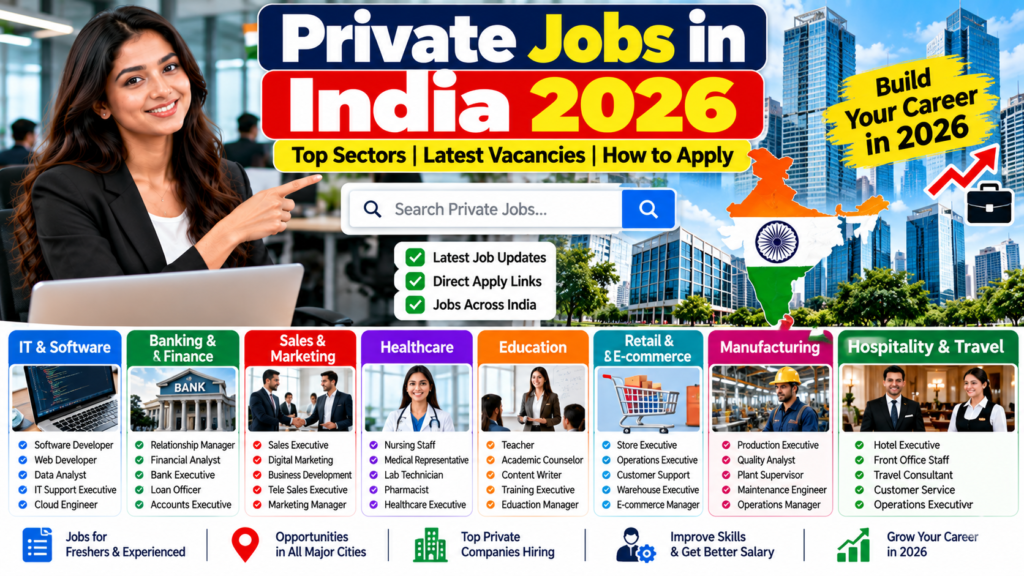
Find suitable private-sector opportunities, check company career pages, prepare your application and learn how to identify recruitment scams before sharing personal information.
Where Can You Find Genuine Private Jobs in India?
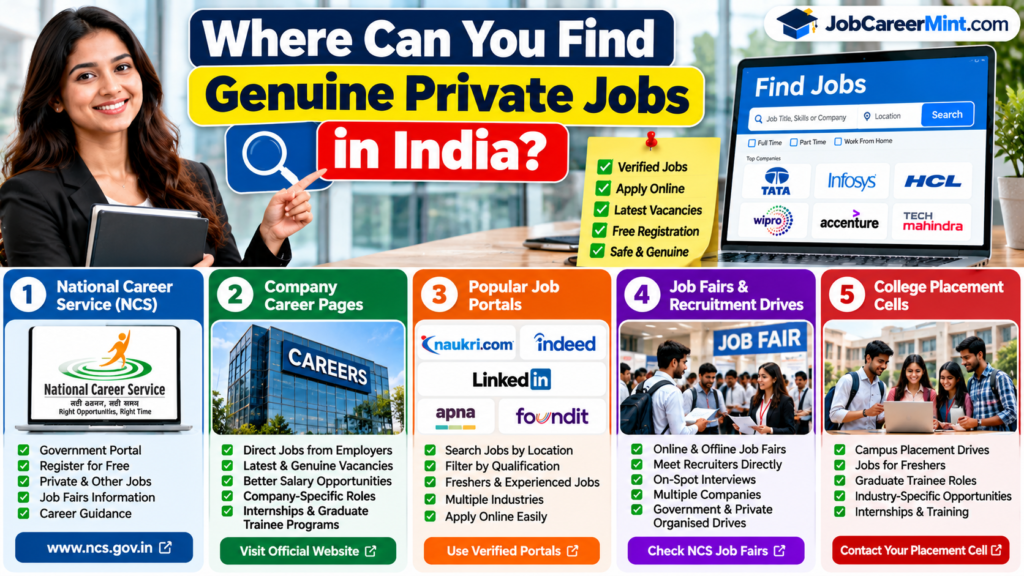
Jobseekers can use several channels to find private-sector opportunities. The best approach is to compare job listings with the employer’s own recruitment information rather than relying on a single website.
| Job Search Source | What You Can Find | What to Check |
|---|---|---|
| National Career Service | Private and other employment opportunities, career services and job fairs | Employer details, job requirements and current application status |
| NCS Job Fairs | Online and offline recruitment drives | Jobseeker registration dates, event dates, location and participating employers |
| Official company career pages | Openings published by individual employers | Job ID, location, qualifications and official application link |
| Established job portals | Searchable listings across industries and cities | Whether the vacancy is genuine, recent and linked to a real employer |
| College placement cells | Graduate trainee roles, campus placements and fresher drives | Eligibility, selection stages and placement terms |
Which Private Jobs Can You Apply for Based on Your Qualification?
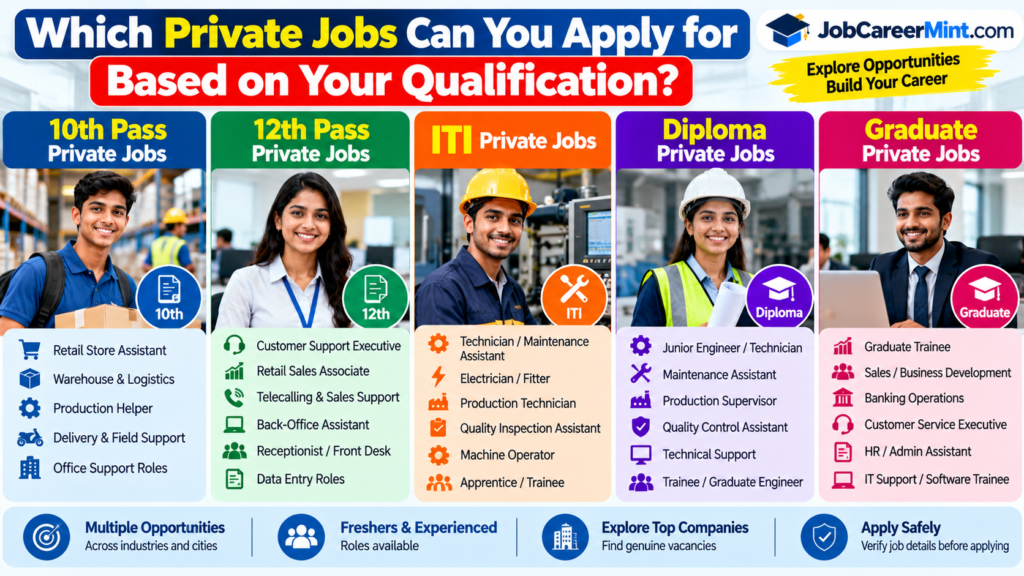
There is no single qualification requirement for all private jobs. Employers set their own educational, experience and skill criteria. Use the following examples to narrow your search.
Private Jobs After Class 10
- Retail store assistant
- Warehouse and logistics support
- Production helper or eligible factory trainee
- Delivery and field-support roles, subject to licence and other requirements
- Office support and facility operations
Some employers accept Class 10 candidates, while others require Class 12, specific skills, physical fitness or previous experience. Check the individual job description before applying.
Private Jobs After Class 12
- Customer support executive
- Retail sales associate
- Telecalling and sales support
- Back-office assistant
- Receptionist or front-desk assistant
- Data-entry roles where the employer’s requirements are met
For office-based jobs, basic computer knowledge, clear communication and accurate typing can improve your suitability for some entry-level roles.
Private Jobs After ITI or Diploma
- Technician or maintenance assistant
- Electrician or fitter, where appropriately qualified
- Production technician
- Quality inspection assistant
- Machine operator
- Apprentice or trainee positions
Choose openings that match your actual trade or engineering branch. A qualification in one ITI trade does not automatically satisfy the requirements of a different trade.
Private Jobs After Graduation
- Graduate trainee
- Sales or business development executive
- Human resources assistant
- Banking operations or customer service executive
- Junior accountant, where the required accounting skills are met
- Recruitment coordinator
- IT support or software trainee, depending on skills and qualifications
Private Jobs for Experienced Candidates
Experienced applicants can search for roles in their current industry, including team leadership, technical operations, finance, sales management, project coordination and specialist functions. Compare the job description with your actual responsibilities and achievements rather than applying based only on a similar job title.
How to Find Private Jobs on the National Career Service Portal
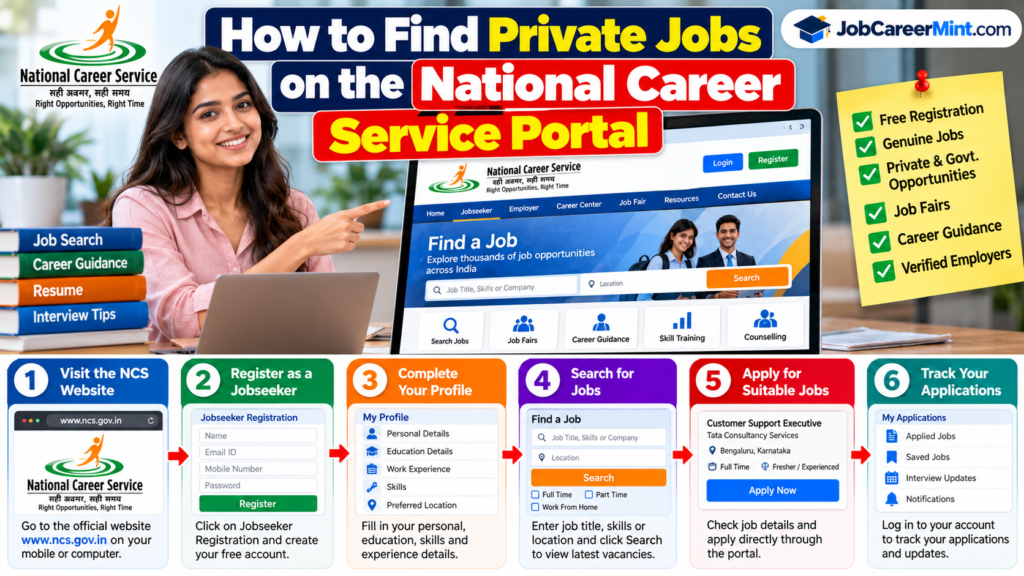
The NCS portal is a government employment service that provides access to job-search facilities and other career resources. Follow these general steps to start your search.
- Visit the official website: Open ncs.gov.in.
- Register or log in: Use the jobseeker registration or login option and provide the information requested by the portal.
- Complete your profile: Add your education, skills, experience, preferred location and other relevant details.
- Search for jobs: Use the job-search section to explore openings that match your qualifications and interests.
- Apply suitable filters: Narrow the results by location, occupation or other available criteria.
- Read the complete listing: Check eligibility, responsibilities, experience requirements, work location and application instructions.
- Submit your application: Follow the process shown in the relevant listing.
- Track your applications: Maintain a record of the employer, job title, application date and any follow-up communication.
Menu names and portal features may change. Follow the current instructions displayed on the official website instead of relying on outdated screenshots or tutorials.
How to Check Whether a Private Job Is Genuine

A professional-looking advertisement does not prove that a vacancy is authentic. Before submitting documents or attending an interview, carry out a few basic checks.
Be especially cautious if a recruiter offers a job without a meaningful selection process, guarantees selection, refuses to identify the employer, or pressures you to transfer money immediately.
Do Private Companies Charge Fees for Jobs?

Recruitment practices vary, but jobseekers should be cautious about demands for registration charges, interview fees, security deposits or payment to guarantee an offer. A request for money is a warning sign that deserves independent verification.
If someone claims to represent NCS, verify the claim through the official portal. The website lists support.ncs@gov.in and the toll-free helpline 1514 for assistance. If you suspect online financial fraud, contact your bank promptly and report it through the appropriate official cybercrime channel.
How to Prepare a Resume for Private Jobs
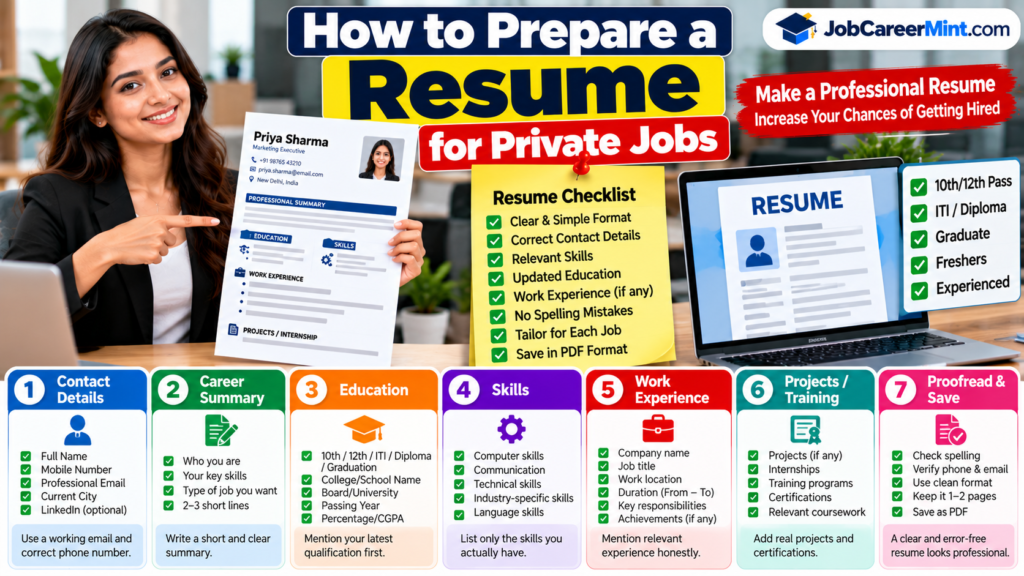
A resume should make it easy for a recruiter to understand your qualification, skills and suitability for the position. It does not need to be unnecessarily long or filled with decorative graphics.
- Contact details: Include your name, phone number, professional email address and city.
- Career summary: Write two or three relevant lines describing your background and the type of role you are seeking.
- Education: Mention your qualification, institution and passing year accurately.
- Skills: List relevant technical, computer, communication or job-specific skills.
- Experience: Describe previous roles and responsibilities honestly, if applicable.
- Projects or training: Add relevant practical projects, internships, certifications or apprenticeship experience.
- Proofreading: Check spelling, dates, phone number and email address before submitting.
Adjust your resume for each suitable opening. Highlight the skills requested by the employer only when you genuinely possess them. Never add fake experience, qualifications or certificates.
How to Prepare for a Private Job Interview
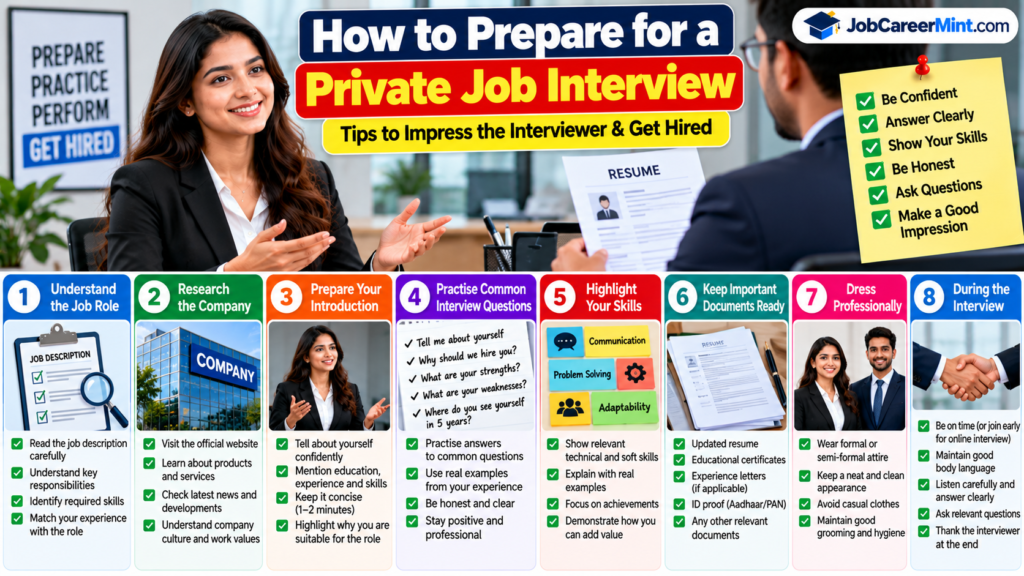
Interview preparation should reflect the position and the employer’s selection process. The following steps can help candidates prepare for common interview questions.
- Read the job description and identify the main responsibilities.
- Research the employer using its official website and reliable sources.
- Prepare a short introduction covering your education, relevant skills and career interests.
- Practise explaining your previous work, projects or training with specific examples.
- Prepare questions about responsibilities, working hours, location, salary structure and employment terms.
- Keep copies of your resume and relevant certificates ready if requested.
- Confirm the interview address or official online meeting details before attending.
For online interviews, check your internet connection, microphone and camera in advance. Do not share banking passwords, OTPs or other authentication codes during a recruitment process.
What Should You Check Before Accepting a Private Job Offer?

Receiving an offer is an important step, but candidates should read the written terms before accepting.
- Job title and main responsibilities
- Employer’s legal name and work location
- Monthly gross salary and expected deductions
- Fixed pay, variable pay, incentives and conditions for earning them
- Working hours, shifts and weekly holidays
- Probation period and notice period
- Leave, insurance and other applicable benefits
- Employment type, such as permanent, fixed-term, contractual or apprenticeship
- Any bond, training-cost recovery or service-agreement terms
Ask the employer for clarification if a salary figure is unclear or if the verbal promise differs from the written offer. Do not resign from an existing job based only on an informal message or an unverified offer letter.
Common Mistakes to Avoid While Applying for Private Jobs
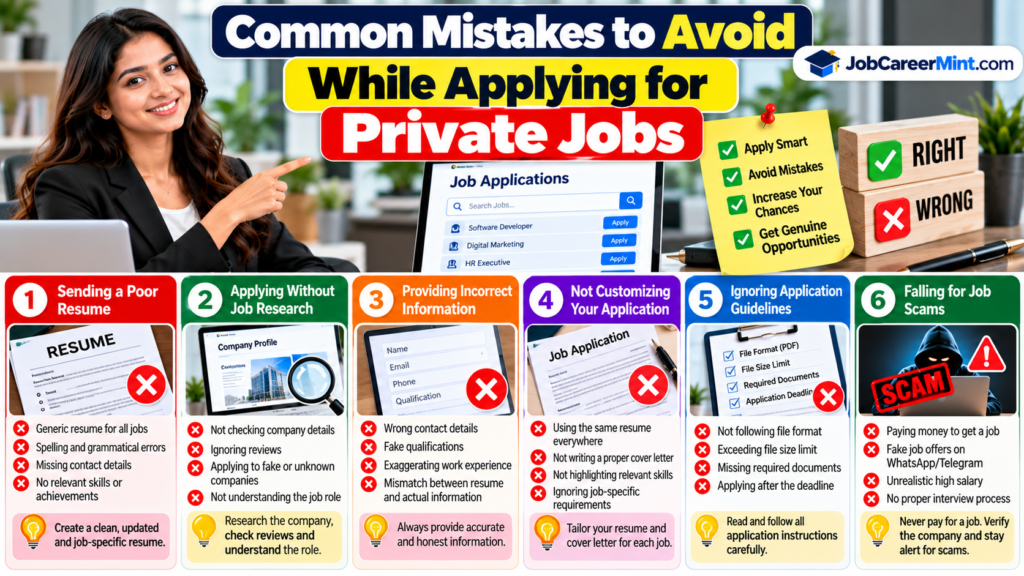
- Applying without checking the minimum qualification or experience requirement.
- Sending the same resume to every employer without reviewing the job description.
- Applying through suspicious links instead of verifying the employer’s website.
- Paying money to someone who promises guaranteed selection.
- Sharing sensitive identity or financial documents before verifying the recipient and the reason for requesting them.
- Ignoring the application deadline or interview instructions.
- Accepting a salary figure without checking whether it means basic pay, gross salary, annual CTC or take-home pay.
- Failing to keep a record of applications and recruiter communications.
Official Websites for Private Job Search
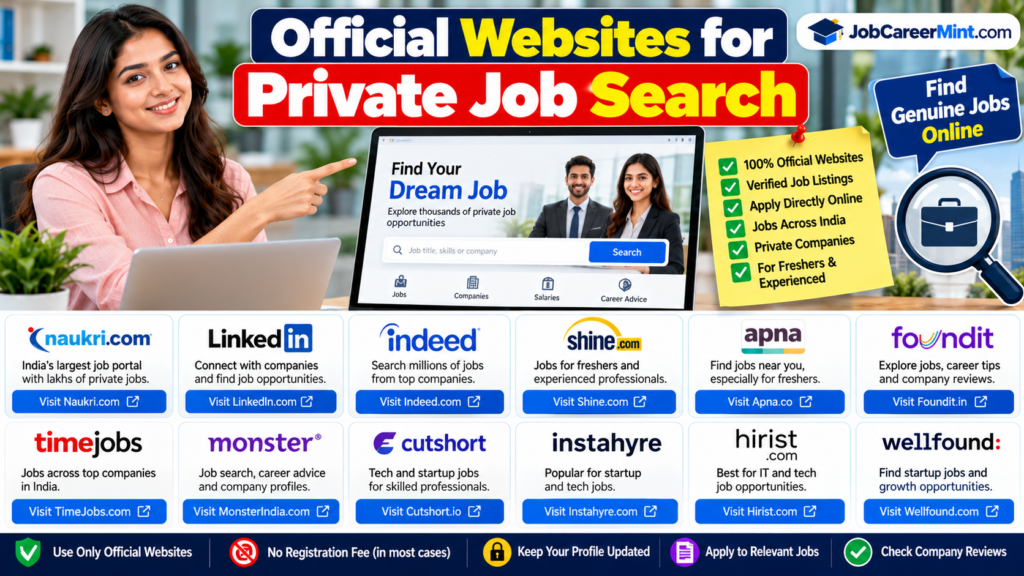
| Website | Purpose |
|---|---|
| National Career Service | Job search, registration and career services |
| NCS Job Fair List | Check current online and offline job fairs |
| NCS Official Website and Advisories | Verify NCS information and review fraud warnings |
For company-specific vacancies, also visit the employer’s own website and open its Careers or Jobs section. The availability of a vacancy should always be checked at the time of application.
Frequently Asked Questions (FAQs)

1. Where can I find private jobs in India in 2026?
You can search on the National Career Service portal, employer career pages, established job portals, college placement services and verified job fairs.
2. Can 10th-pass candidates apply for private jobs?
Yes. Some employers recruit Class 10 candidates for support, retail, operations, warehouse and other entry-level roles. Eligibility depends on the specific vacancy.
3. Can freshers apply for private jobs?
Yes. Freshers can search for trainee, customer support, sales, operations, graduate trainee and other entry-level positions. Check whether the employer requires previous experience.
4. Is the National Career Service portal free?
Yes. The official NCS website states that its registration, job application and interview-processing services are free for jobseekers.
5. How can I verify a private job vacancy?
Check the employer’s official website, search for the original vacancy, verify the recruiter’s contact details and read the complete job description before sharing documents.
6. Do private companies guarantee jobs after an interview?
No general guarantee applies. Selection depends on the employer’s process and the candidate’s suitability. Treat claims of guaranteed selection in exchange for payment as a serious warning sign.
7. What documents are commonly needed when applying for a private job?
Employers commonly request a resume and may ask for educational certificates, experience details or identity documents at the appropriate stage. Requirements vary, so share documents only with a verified employer through an appropriate channel.
8. What is the difference between CTC and in-hand salary?
CTC is the employer’s stated annual cost of employing you and may include components that are not paid directly every month. In-hand salary is the amount received after applicable deductions. Ask for a salary breakdown before accepting an offer.
9. Can I apply for more than one private job?
Yes. You can apply to multiple suitable openings. Keep a record of each application and customise your resume to match the relevant role honestly.
10. What should I do if a recruiter asks me to pay money?
Do not pay immediately. Verify the employer and recruitment process independently. For claims involving NCS, use the official NCS website and its published contact details to confirm authenticity.
Conclusion

Finding a suitable private job requires more than sending applications to as many employers as possible. Candidates should identify roles matching their qualifications, verify the vacancy, prepare a relevant resume and understand the employment terms before accepting an offer.
The National Career Service portal is a useful starting point for job searches, career guidance and job-fair information. Combine it with official company career pages, keep track of your applications and be alert to recruitment scams. A careful, consistent approach can help you focus on genuine opportunities that match your skills and career goals.
Official reference: National Career Service (Government of India) and NCS Job Fair List.

 DMHO Rajanna Sircilla Recruitment 2026: 35 Posts, Apply Offline